Campo HB
Mi nombre es Cedric Crumblin, y con tres años de experiencia, desempeñándose actualmente como Coordinadora de RBT en el campo de la salud conductual — He completado una extensa guía de referencia sobre cómo convertirte en el mejor RBT que puedas ser.
Trabajando como Técnico registrado en comportamiento (RBT) es un llamamiento profundamente significativo y gratificante. Cada día, los RBT ayudan a los niños a desarrollar habilidades esenciales, ayudan a las familias a superar los desafíos y contribuyen a un progreso que les cambia la vida. Para hacerlo bien, un RBT debe ser preparado, adaptable y con los pies en la tierra en las expectativas profesionales del campo.
Mi primer consejo para todos los RBT es asegúrese de que su BCBA lo haya incluido en el sistema BACB y que tu evaluación de competencias para la renovación está actualizado, lo que evita lapsos innecesarios en la prestación del servicio si su certificación queda inactiva.
«Si no pueden aprender de la manera en que enseñamos, les enseñamos de la manera en que aprenden».
— Dr. Ivar Lovaas
Esta cita refleja exactamente lo que significa servir como RBT: conocer a cada niño donde esté y ayudarlo a crecer.
La consistencia es la columna vertebral del progreso en la terapia ABA. Llegar a tiempo permite que las sesiones comiencen sin problemas y contribuye a que el niño mantenga una rutina estable.
El Código ético BACB (2022) estados:
«Los proveedores deben cumplir sus compromisos con los clientes siendo puntuales, preparados y confiables».
La puntualidad es más que profesionalismo: es un servicio al cliente.
Los RBT llegan a los hogares desde muchas culturas, tradiciones y estilos de comunicación. El respeto por estas diferencias promueve la confianza y la colaboración.
Como lo señaló Cooper, Heron y Heward (2020):
«La práctica culturalmente receptiva es esencial para la prestación exitosa de servicios de análisis del comportamiento».
La flexibilidad y la humildad contribuyen en gran medida a construir relaciones positivas.
Conocerás a niños que son vocales, no vocales, enérgicos, reservados o que muestran altas tasas de conductas desadaptativas. Cada perfil requiere paciencia y un enfoque personalizado.
Lovas (2003) nos recuerda:
«El comportamiento se aprende y se puede cambiar con la enseñanza adecuada».
Tu presencia y creatividad hacen posible ese aprendizaje.
Ya sea que su supervisor sea práctico o más independiente, cada uno brinda la oportunidad de aprender.
El BACB (2022) hace hincapié en:
«Se espera que los RBT sigan las instrucciones de sus supervisores y soliciten aclaraciones cuando sea necesario».
La franqueza refuerza su profesionalismo.
Un RBT preparado a menudo conlleva:
La organización ayuda a que las sesiones fluyan sin problemas y apoya la prevención de crisis.
Las familias dependen de la coherencia. La confiabilidad genera confianza y garantiza que los clientes reciban la atención que merecen.
Cooper y otros (2020) destacar:
«La coherencia en la implementación es fundamental para la eficacia del tratamiento».
ABA se basa en aprendizaje continuo. La retroalimentación no es una crítica, es un camino hacia el crecimiento.
Skinner (1974) nos recuerda:
«La educación es el proceso de organizar contingencias de refuerzo».
La retroalimentación es una de esas contingencias.
Los RBT deben cumplir con los estándares establecidos por:
«Los RBT son responsables de mantener los registros y completar la documentación de manera honesta y precisa».
— BACB (2022)
Equilibrar las sesiones, las notas, los plazos y el cuidado personal requiere disciplina. Administrar el tiempo reduce el estrés y aumenta la calidad de la atención.
Los pequeños detalles importan: la precisión de los datos, las notas de las sesiones y la comunicación clara guían las decisiones de tratamiento.
«La toma de decisiones basada en datos es fundamental para el análisis del comportamiento».
— Cooper y otros (2020)
Las renovaciones, las verificaciones de antecedentes y las evaluaciones de competencias deben rastrearse durante todo el año.
«Los RBT deben mantener la certificación activa cumpliendo con todos los requisitos de renovación».
— BACB (2022)
Muchos cuidadores están estresados o inseguros. La comunicación tranquila, la empatía y el profesionalismo generan confianza.
Carl Rogers (1980) dijo:
«Cuando alguien te escucha de verdad... es como darle oxígeno emocional».
Las familias a menudo necesitan ese oxígeno.
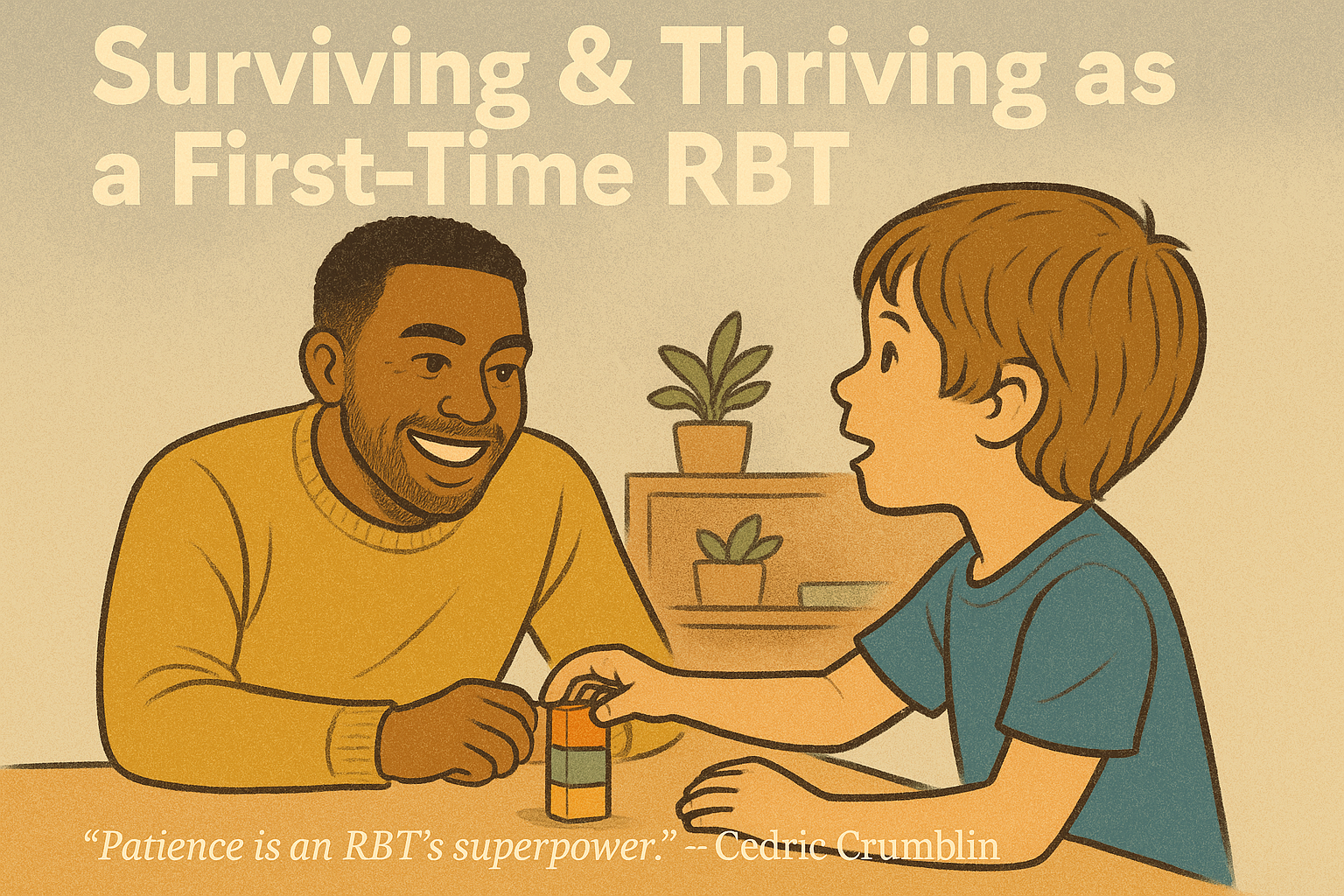
«La paciencia es el superpoder de un RBT».
— Cedric Crumblin
Ser un RBT requiere corazón, disciplina y humildad.
Estás ingresando a los hogares, dando forma al aprendizaje y ayudando a los niños a construir un futuro mejor. Con la preparación y la mentalidad adecuada, tiene la oportunidad de hacer un impacto verdadero y duradero.

