Gossip and Rumor in the Workplace
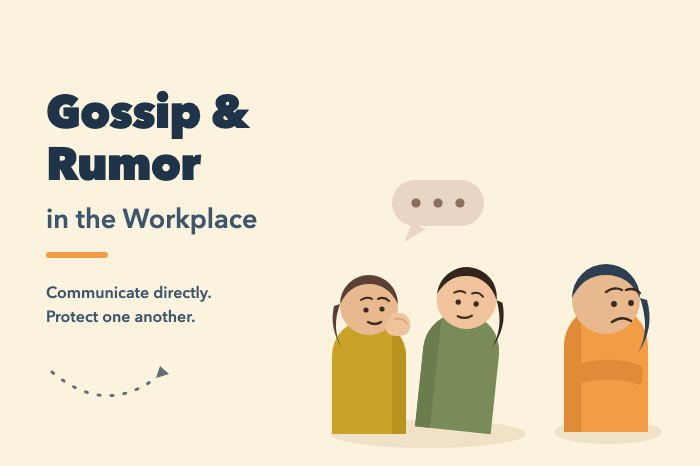
Healthy workplaces aren't ones where conflict never happens, they're the ones where people know how to work through conflict without creating a second problem through gossip or rumor. Our goal at BH Field isn't to eliminate normal, everyday conversation. It's to build a culture where we communicate directly, protect one another's emotional wellbeing, address real concerns the right way, give and receive corrective feedback and avoid turning coworkers into a topic of entertainment, bonding, or retaliation. Ambiguity in the workplace is one of the biggest drivers of gossip and rumor, so let's take a closer look at how this shows up here at BH Field.
Understanding the Difference
Gossip and rumor both involve information passing between people, but they aren't quite the same thing. Rumor centers on an upcoming or past event; for example, "I heard some of us might lose our jobs because of the management change." Gossip centers on a person; for example, "I heard the new boss has a short temper."
Why We Gossip
People gossip for multiple reasons: to feel connected, to gain status or information, or simply to be entertained. Gossip has long served as a way to spread news and pass the time, and it can feel like an easy way to learn about a coworker or a manager without asking them directly. It tends to show up most when the rules, expectations, or direction from leadership feel unclear, when there's a gap, gossip and rumor rush in to fill it.
Rumor works the same way. It's built from unverified information and tends to spread wherever there's tension and a lack of clarity, because it offers people a way to make sense of situations they don't fully understand. Rumor often serves as a way for people to make sense of uncertainty. Before participating in or repeating a rumor, pause, think critically, and verify the facts.
At the end of the day, we're all human, working together through the same wins and struggles. Gossip and rumor tend to carry assumptions, spread negative judgments, and more talk than a situation calls for, usually built on incomplete or distorted information. Before joining in, it's worth pausing to think critically about whether to participate or let it go, because the effects of gossip and rumor build over time and rarely stay contained.
The Effects of Gossip and Rumor
The damage doesn't stop with the person being talked about, it spreads to teammates, and eventually to the whole team. It's worth remembering how much harm this can cause, to others and to ourselves.
- Damages morale, confidentiality and psychological safety
- Costs the gossiper credibility and often signals to others that they could be the next target
- May harm an individual's reputation and emotional well-being.
- Increases anxiety, uncertainty, and workplace tension.
- Can damage someone's reputation and sense of identity
- Erodes trust, weakens working relationships, and chips away at the broader team culture
- Can turn confidential information into a tool for controlling others
- Creates dread or worry about how a situation might unfold
- Encourages assumptions and defensive reactions.
Gossip and rumor can breed disharmony, suspicion, and a tendency to assume the worst in one another. People may become defensive or overreact when they feel targeted. For the person being talked about, the emotional toll can be real, it can leave them feeling excluded, or like they've been stabbed in the back.
Choosing How to Respond
Avoid criticizing, judging, or highlighting the mistakes or misfortunes of others. Do not shape another person's opinion through speculation, assumptions, or incomplete information. Lead with integrity, empathy, and professionalism. Let's be people who choose not to point out others' mistakes or misfortunes just to shape opinion, stir up unfair judgment, or bend the truth. Integrity is the standard. If a coworker brings gossip or rumor to you, here's how to handle it with care:
If a Coworker Approaches You with Gossip or a Rumor
- Don't spread it or feed it, redirect instead. Something as simple as "Thanks for letting me know, but that's not really my business" goes a long way.
- Kindly invite them to change the subject: "I hear you, but let's talk about something else."
- Stay grounded, don't judge, and don't assume it's true. Just invite them to let it go. Overall, keep an open mind and avoid making assumptions without evidence.
- Extend the same empathy to the person being talked about that you'd want for yourself, remember, the person gossiping today could talk about you tomorrow.
- Stay a little skeptical, and use your philosophical doubt to check things out for yourself: Where did this come from? Is it actually true? Verify information before accepting it as true.
- Make it a personal practice not to trade or spread negative comments about coworkers.
References
- Sun, T., Schilpzand, P., & Liu, Y. (2023). Workplace gossip: An integrative review of its antecedents, functions, and consequences. Journal of Organizational Behavior, 44(2), 311–334.
- Baer, M. D., Bundy, J., Garud, N., & Kim, J. K. (2018). The benefits and burdens of organizational reputation for employee well-being: A conservation of resources approach. Personnel Psychology, 71(4), 571–595.
- Beersma, B., & Van Kleef, G. A. (2012). Why people gossip: An empirical analysis of social motives, antecedents, and consequences. Journal of Applied Social Psychology, 42(11), 2640–2670.
- Michelson, G., Van Iterson, A., & Waddington, K. (2010). Gossip in organizations: Contexts, consequences, and controversies. Group & Organization Management, 35(4), 371–390.
- Houmanfar, R., & Johnson, R. (2004). Organizational implications of gossip and rumor. Journal of Organizational Behavior Management, 23(2–3), 117–138.
Find support for your child
Complete our questionnaire to know the next steps you can take to help your child succeed.