Benefits of Parent Engagement During Their Child’s ABA Sessions
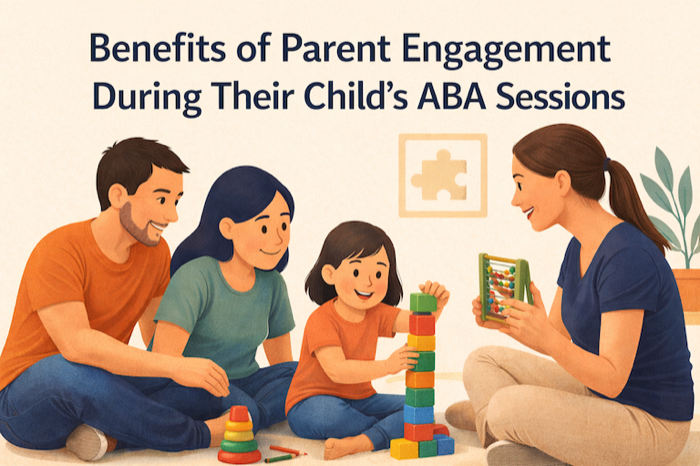
Applied Behavior Analysis (ABA) is widely recognized as an evidence-based intervention for children with Autism Spectrum Disorder (ASD) and other developmental challenges.
ABA focuses on understanding and improving socially significant behaviors through systematic observation, reinforcement, and data-driven decision making.
While ABA can be delivered in multiple formats, from therapist-led clinic sessions to in-home intervention, growing research emphasizes the importance of parent engagement during ABA sessions as a critical factor in maximizing outcomes for the child. Parent involvement in therapy supports skill acquisition within sessions and promotes generalization of learned skills across environments, enhances parental confidence, and strengthens the parent-child relationship. This paper explores these benefits in depth, integrating findings from peer-reviewed studies and professional literature.
Enhanced Skill Generalization and Consistency
One of the central goals of ABA is to teach skills that can be applied across various real-world contexts. However, skills learned in a controlled therapy environment do not automatically transfer to home, school, or community settings unless they are consistently reinforced. Parent engagement directly facilitates this generalization and maintenance of skills.
When parents participate in ABA sessions, they observe intervention techniques firsthand and learn how to apply these strategies within daily routines. This continuity ensures that the child experiences consistent expectations and reinforcements across environments. Research indicates that interventions that include parental teaching and involvement result in higher rates of skill acquisition and developmental progress than therapist-only delivery (e.g., consistent parental teaching in addition to structured early intervention) because parents reinforce targets throughout the child’s everyday life.
For instance, Ozonoff and Cathcart’s classic research highlighted that children demonstrating consistent parent-implemented teaching showed increases in cognitive and developmental skills when parental involvement was integrated with structured early interventions. While this specific study is not ABA-specific, it underpins the general evidence base showing that caregiver participation enhances the transfer of learned behaviors into natural settings. When parents are trained within sessions, they become a consistent source of reinforcement outside formal therapy, which is crucial for skills to “stick” and become functional. This aligns with applied behavior analytic principles, which emphasize the importance of teaching across multiple exemplars and contexts to promote fluency and generalization.
Improved Communication and Collaboration with Therapists
Active engagement fosters stronger collaboration between therapists and families. When parents are present during sessions, they can share real-time observations, express concerns, and contribute insights about their child’s preferences, motivators, and daily challenges. This two-way communication allows therapists to tailor goals more effectively and modify intervention strategies to fit the child’s unique context.
Research into family-mediated interventions and parent perspectives on engagement shows that parents who participate in their child’s behavior analytic treatment report a greater understanding of intervention methods and more confidence in implementing strategies independently. This enhanced collaboration supports shared decision-making about targets and intervention adjustments, leading to a more individualized and responsive therapy plan. Moreover, involving parents in sessions reduces the “disconnect” that can occur when therapists work in isolation from a child’s home life. Without parental participation, barriers can emerge between what is taught in therapy and what occurs at home, limiting the effectiveness of the intervention. Active parent involvement helps bridge this communication gap, creating coherence across settings.
Parent Empowerment and Self-Efficacy
Participating in ABA sessions serves not only the child but also the caregiver. Engaged parents acquire knowledge of behavior analytic principles such as reinforcement, prompting, and data collection, which increases their confidence and sense of competence. This self-efficacy is essential for parents to support their children’s development beyond therapy hours. Studies have shown that when parents receive structured training and coaching, including significant hours of instruction before and during implementation, their ability to apply ABA strategies improves dramatically. Parents who feel capable of implementing techniques are more likely to use them consistently and effectively, leading to improved child outcomes. This empowerment can also reduce parental stress, as parents feel less overwhelmed when equipped with concrete skills to support their child’s progress.
Empowered parents become advocates for their children across educational, healthcare, and social environments, increasing the likelihood that needs are met and supports are aligned. Such advocacy is particularly important as children grow older and transition between developmental stages.
Strengthened Parent-Child Relationship and Emotional Support
Parent engagement is not solely about technical implementation; it also has emotional and relational benefits. Children often respond positively to parental attention and involvement, which enhances motivation and engagement during sessions. When parents participate, children may feel more secure, leading to increased willingness to try challenging tasks and celebrate successes. This emotional support contributes to a nurturing and growth-oriented therapeutic environment. A qualitative study examining parent involvement in therapy found that therapist observations and family reports highlighted improved child motivation and persistence during sessions when parents were actively engaged. Beyond immediate session effects, parents also learned emotion regulation strategies that they could apply with their children outside of formal therapy, providing tools to handle frustration and behavioral challenges collaboratively.
This relational benefit underscores ABA’s broader goal of enhancing socially significant behaviors that improve a child’s ability to function and participate meaningfully in family life. Active parental participation can make the therapy process a shared journey, reinforcing familial bonds as growth unfolds.
Challenges and Considerations
Despite the clear benefits, logistical barriers, such as time constraints and competing family responsibilities, may limit parents’ ability to engage fully in sessions. Moreover, effective involvement often requires structured training and coaching rather than passive presence.
Programs that provide supportive parent coaching and address scheduling and resource constraints tend to see better family participation and outcomes. These considerations highlight the need for behavior analytic practitioners to intentionally design family-centered approaches, ensuring that caregivers are equipped, supported, and integrated into the therapy process meaningfully.
Conclusion
Parent engagement during a child’s ABA session yields multifaceted benefits. It promotes generalization of skills, enhances communication and collaboration with therapists, strengthens parental self-efficacy, and deepens the parent-child relationship. While barriers exist, intentional inclusion of parents as partners in therapy enhances the likelihood that behavioral gains are meaningful, sustainable, and woven into the fabric of everyday life. As the field continues to evolve, supporting parent involvement not only honors family empowerment but also aligns with the core ABA goal of improving socially significant behavior across contexts and the lifespan.
References
- Bearss, K., Johnson, C., Smith, T., Lecavalier, L., Swiezy, N., Aman, M., … & Scahill, L. (2015). Effect of parent training vs parent education on behavioral problems in children with Autism Spectrum Disorder: A randomized clinical trial. JAMA, 313(15), 1524–1533. doi:10.1001/jama.2015.3150 — Evidence showing parent training improves outcomes more than standard parent education.
- Cheng, W. M., Smith, T. B., Butler, M., Taylor, T. M., & others (2023). Effects of parent-implemented interventions on outcomes of children with autism: A meta-analysis. Journal of Autism and Developmental Disorders. Springer. — Meta-analytic evidence that interventions involving parents produce moderate benefits in behavior, social skills, language, and adaptive outcomes.
- Deb, S. S., Retzer, A., Roy, M., Acharya, R., Limbu, B., & Roy, A. (2020). The effectiveness of parent training for children with autism spectrum disorder: A systematic review and meta-analyses. BMC Psychiatry, 20, 1–23. — Systematic review demonstrating that structured parent training significantly reduces behavioral problems and improves functioning in autistic children.
- Ferretti, L. A., Uhl, A., Zawacki, J., & McCallion, P. (2025). Understanding barriers and facilitators of parent/caregiver involvement in home-based ABA programming for their autistic child. Children, 12(7), 850. — Highlights parent perspectives on involvement, training, barriers, and facilitators in ABA contexts.
- Garikipati, A. (2024). Parent-led applied behavior analysis to impact clinical outcomes for individuals on the autism spectrum: Retrospective chart review. Journal of Pediatric Rehabilitation Medicine. — Clinical data showing children’s skill acquisition following parent-led ABA training.
- Rovane, A. K. (2020). Adherence to behavioral treatments and parent stress in families of children with autism. Research in Autism Spectrum Disorders. — Research demonstrating that parent involvement can reduce caregiver stress and boost treatment adherence.
Find support for your child
Complete our questionnaire to know the next steps you can take to help your child succeed.